

Menopause; Returning To Real Time
Menopause is often framed as a problem — the reason we’re tired, the reason we’re foggy, the reason we “can’t keep up” like we used to.
Amongst the many changes, from hot flashes and aches to brain fog, it can feel as if our bodies are letting us down.
We start searching for a new pace, a new way to live our lives.
But what if menopause symptoms aren’t really slowing us down?
What if it’s actually a moment when our bodies refuse to live at an unnatural pace — a pace never designed for nourishment, digestion, rest, or pleasure?
During this week’s session in the Winter Wellbeing 21-Day Reset, we explored the theme Nourish, Balance & Glow. The conversation quickly turned to time — or the lack of it.
Many of you shared the same struggle:
You care about what you eat.
You take time to choose good-quality food.
You prepare meals you know are nourishing.
And yet…
You eat standing up.
You eat rushed.
Coffee is “on the go.”
Meals happen while your mind is already on the next thing.
Not because you don’t value yourself — but because life moves too fast.
Here in the UK, we live under constant urgency. Midlife women juggle work, family, emotional labour, changing hormones, and the expectation to remain endlessly capable — all while being told we should slow down.
In contrast, one participant from France shared how, culturally, meals are a sacred pause. Two-hour lunch breaks are normal, and walking while eating is considered unusual. Time to rest, savour, and digest is expected and honoured.
And yet, when our bodies do naturally slow us down, we’re often scolded for it.
But what if this slowing isn’t a failure?
What if menopause is actually a return to real time — the correct human pace — where eating, resting, digesting, and enjoying life are not indulgences, but necessities?
This is the rhythm your body understands:
Your skin understands it.
Your digestion understands it.
Your nervous system understands it.
Cooking from scratch, using all our senses, and preparing meals mindfully isn’t extra work — it’s part of the digestive process. Yet we are often rushed, skipping a crucial step in supporting our body’s function.
When we support our upper digestion through careful food preparation, mindful chewing, and balanced stomach acid levels, the rest of our digestive system is more likely to function optimally in the long term.
Midlife and menopause aren’t a decline. They’re an invitation to slow down, honour the pace of your body, and reclaim nourishment for your mind, body, and skin.
Book Recommendation
I can highly recommend this book to read as a guide to rediscover a healthy and joyful relationship with food.
I can’t think of a better time in life than to reconnect with good food than the menopause, when our tastes and desires change, along with our time patterns and pace of life.
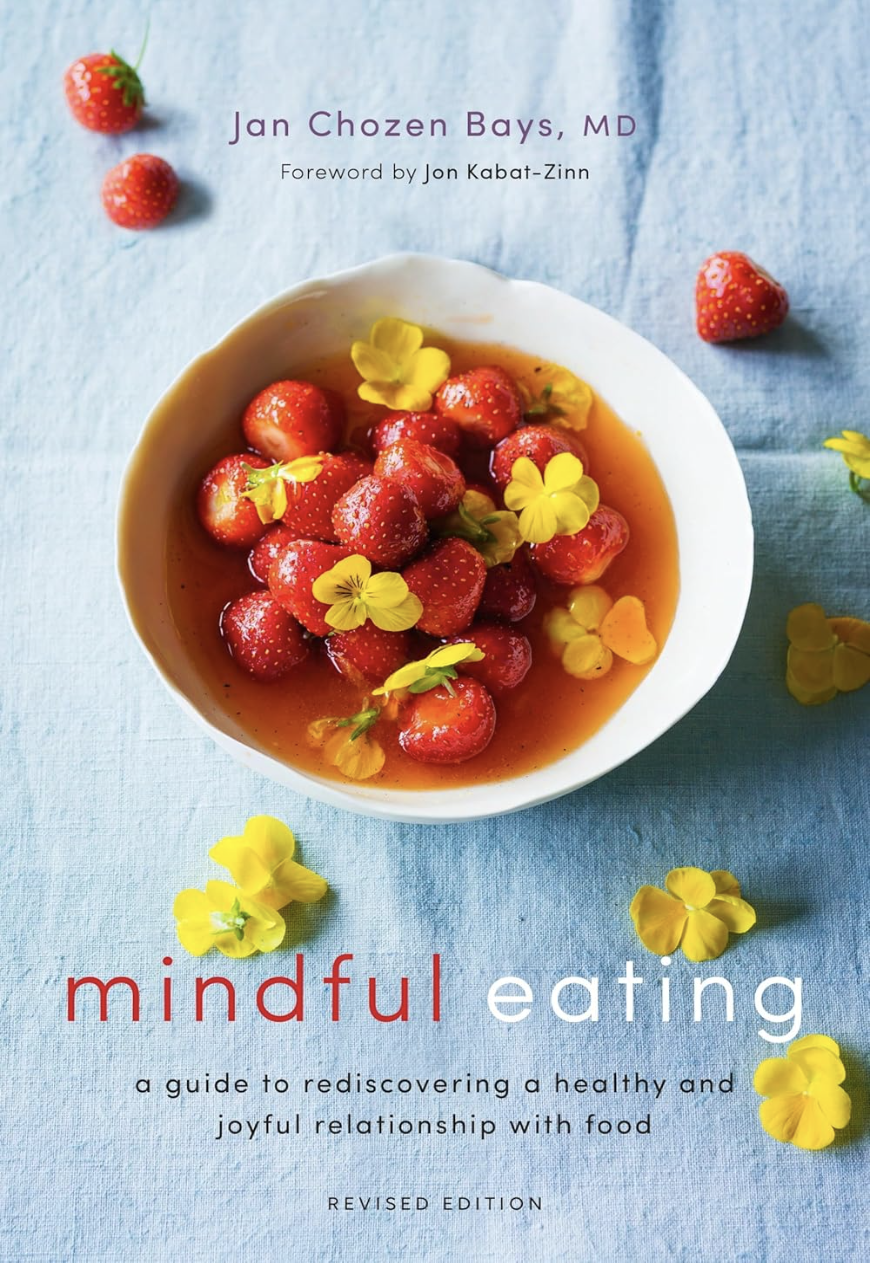
Mindful Eating By
Jan Chozen Bays MD
“….it can be difficult to simply enjoy food and all the social functions that revolve around preparing, sharing and celebrating the miracle of sustenance and the web of life within which we are embedded and depend upon….”
